While pumpkin gets royal treatment each fall, it’s easy to forget its other fall produce friends. (Something about a butternut squash latte doesn’t sound quite as appealing, does it?) However, when it comes to eating seasonally in the fall, there are quite a few tasty options you don’t want to miss this year.
Why eat seasonally? Eating seasonally offers multiple benefits, including increased nutrient density, affordability, sustainability, and flavor.
Nutrient Density: When food is grown in its proper season and harvested at the peak of its ripeness, it retains more nutrients. The result? More Vitamin A in that sweet potato. More B vitamins in your leafy greens. More lycopene in the skin of red apples.
Affordability: Supply and demand applies to seasonal produce. For example, when more pears are grown and harvested in the fall, we can expect plenty of them to hit our local stores, thereby decreasing the price.
Sustainability: If youve ever eaten an avocado from Mexico, you may have considered just how far that delicious green fruit traveled to get to your dinner plate. The best way to reduce the carbon footprint associated with long distance produce travel is to eat whats in season in your region of the country. Not only does this benefit the environment, but it benefits your local famers as well!
Flavor: And if all those reasons werent convincing enough for you, consider the tastiness of your produce! Apples are crisper and sweeter in the fall. Butternut squash is at its most vibrant orange. Cabbage is crunchier as the weather cools.
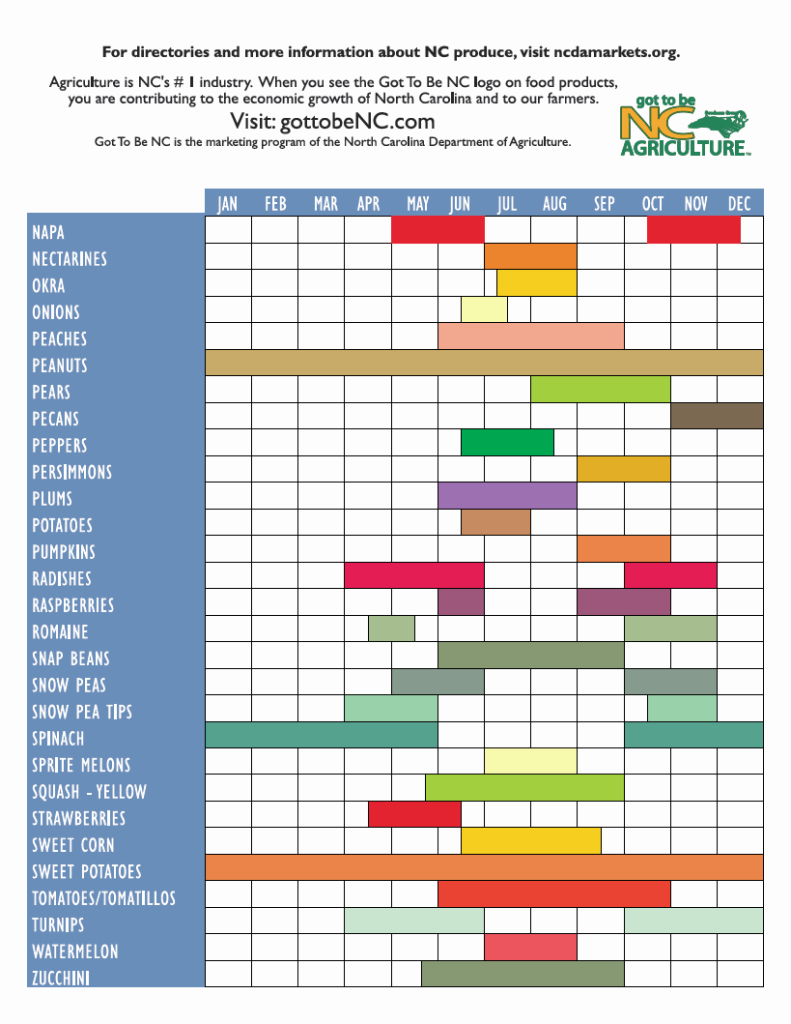
If youre not sure whats in season in North Carolina in the fall, take a peek at the chart below:

Have a happy and healthy fall!